
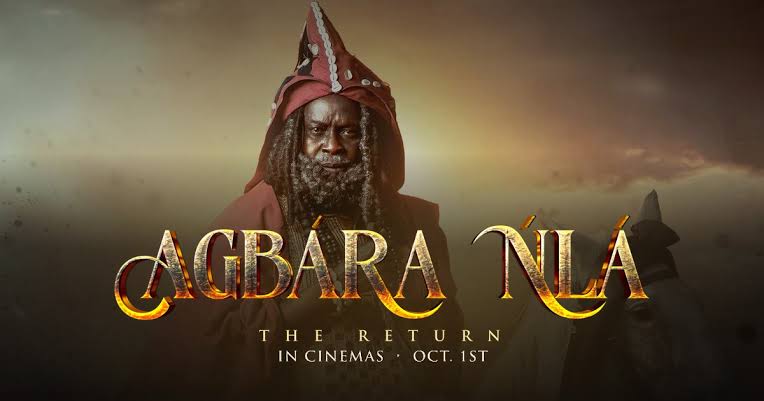

I recently had the opportunity to finally see Agbara Nla: The Return, the reboot of the 1993 series by Mount Zion Faith Ministries. And, goodness, what a beautiful film it is!
Beyond the nostalgia of revisiting a story I watched growing up, seeing this new iteration, so expertly crafted by the current production team, left me inspired in several ways. It was one of those experiences that makes you want to sit down, reflect on what you have just watched, and talk about it. This is why I decided to put this series of articles together: capturing my thoughts on the film, the elements I particularly loved, and the things that stood out to me. The first (this) talks about the storytelling, the second would touch on the theological aspects that stood out to me, and the third would be my reflections on Mount Zion Faith Ministries as a whole.
I should warn you ahead that my articles would be spoiler-heavy, so if you would prefer to see the movie first, perhaps this is a good place to stop reading. The original series however is available to view on YouTube in English versions and in Yoruba.
Establishing the Threat
Having watched the original film, one of the first things I noticed and appreciated about this reboot was how its opening chapter established the threat that Ishawuru represents, setting the stage for the story for new viewers and nostalgic returnees.
Here, we are introduced to Ishawuru through his confrontation with the king, followed by the fulfilment of his threat when he eventually kills him. For a moment there, I was expecting a bait-and-switch reveal that it had just been a dream sequence, but as the minutes rolled on without that reveal, the gravity of the evil we were dealing with dawned on me even much more. This was not just another Mike Bamiloye character. I understood why his character featured prominently in the movie’s marketing.
It was a brilliant storytelling decision. We get to see him as the true principality exercising dominion over the town of Muwonleru through bondage. Placing him on a horse for some of his screentime added to the grandeur of this character who considered himself better than everyone else, and literally on his high horse.
What I particularly appreciated was how deliberately the film established Ishawuru’s genuine wickedness. This man delighted in the the suffering of those under his influence, and in the downfall of others. In his interactions with those he opposed, Ishawuru seemed capable of exchanging words that might ordinarily suggest courtesy or even empathy, but beneath them was an unmistakable desire for their destruction.
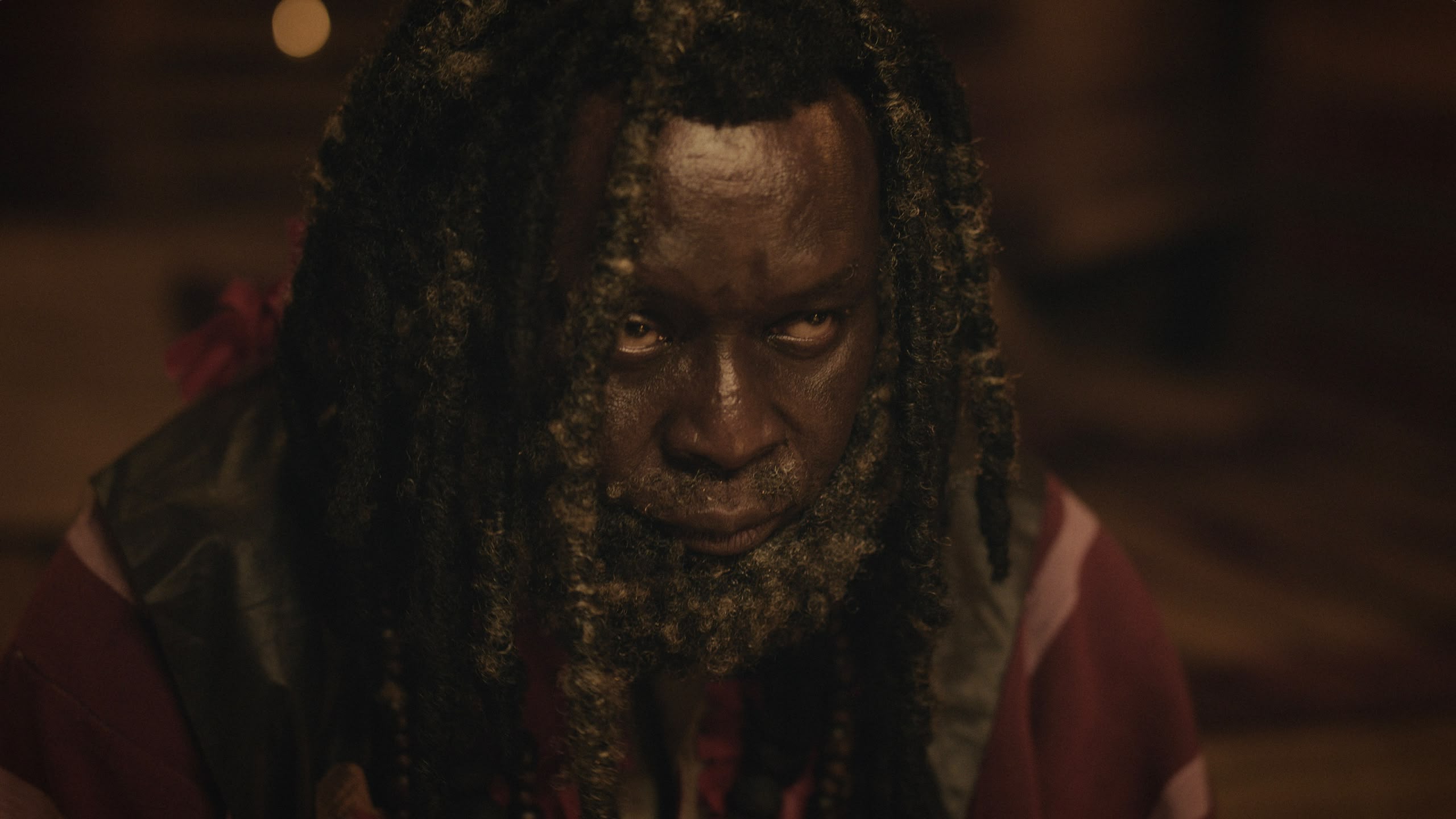
One scene comes to mind that delivered this expertly: As the Engineer and Olabode (Pastor Philip Olubakin’s character) exited Ishawuru’s shrine, Olabode turned back to glance at Ishawuru, only to see that the old man had been staring at him already. The shot stalled on the Ishawuru’s steely glare, filled with hate, curiosity, pride and danger. So much was communicated in that shot, and I was grateful the editors retained it in the movie.
There was also an interesting contrast in how Ishawuru related to human beings and the spiritual powers he interacted with. Whenever he interacted with human beings, he displayed no fear. But when he interacted with the evil spirits and principalities, there was an unmistakable sense of trepidation. They thus established the even greater threat of those evil powers.
That contrast made the eventual encounter with Jesus even more meaningful. But I will return to that later.
(Fun fact: the original movie was going to be titled ‘Agbara to ju agbara lo,” which means in English, ‘The Power that is greater than all other powers.’ It was later shortened to the more compact title, ‘Agbara Nla’, or The Ultimate Power.)
The Set Design
Another aspect of the storytelling I thoroughly enjoyed was how the film constructed its world.
Starting with the palace in the opening chapter, the shot in the Kabiyesi’s library has remained with me to this day. The towering bookshelves of bound books flanked the king as he wrote his letter in fear, displaying the colonial history preceeding his reign and that he relied on. Apart from its beautiful colour design, it grounded the story in the realities of modern traditional royalty who do not just dwell in mud huts but are well-rooted in the contemporary world around them. That this did not protect him from Ishawuru’s scourge established him as an even greater force, as we have established.
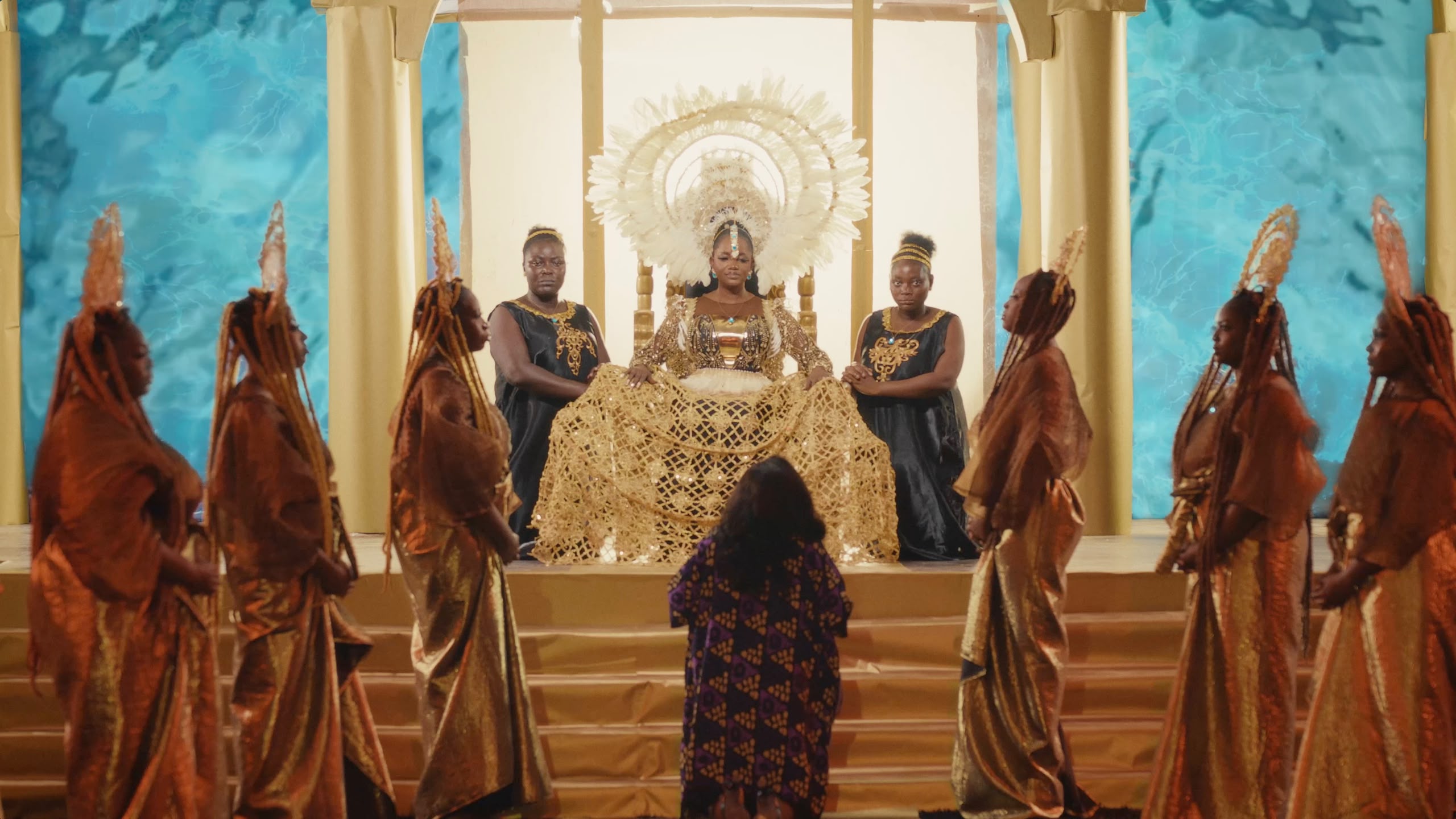
Rather than presenting evil as one monolithic force, the story showed us different groups of spiritual powers, each seemingly operating within its own territory or sphere of influence. Each had its own domain, its own way of exercising control, and its own share in keeping the people of Muwonleru (and the world of the story at large) in bondage. Each of the three major sets – the Aro-Meta cave, the Tree spirits’ cove, and the Marine Kingdom’s underwater palace – was presented in a mix of practical and visual effects that set each apart as a domain in itself, showing just enough as a hint of the larger darker influence.
Whenever we returned to shots of the village, we encountered people crying, suffering from sickness, and living in sorrow and pain. It effectively established the stakes of the story, displaying the the consequences of the influence of darkness on ordinary people.
One particular set that stood out to my wife and I (we watched the movie together) was that of the evil spirits inhabiting the tree. There was something deeply unsettling about these characters, with human faces, straw bodies and lighting that expertly hid any giveaways that these were just actors in mere costumes. They looked otherworldly; human, but not quite human.
It reminded me of a quote by Mr Beaver in C. S. Lewis’s novel, The Lion, the Witch and the Wardrobe:
“But in general, take my advice, when you meet anything that’s going to be human and isn’t yet, or used to be human once and isn’t now, or ought to be human and isn’t, you keep your eyes on it and feel for your hatchet.”
That uncanny feeling of wary familiarity was captured amazingly. Perhaps my Nigerian upbringing brought this home in away that made it feel more proximal to reality, and thus even much more scary.
This leads me to the Horror tropes.
Horror as a Storytelling Tool
I also loved how the filmmakers incorporated elements of the horror genre into the film.
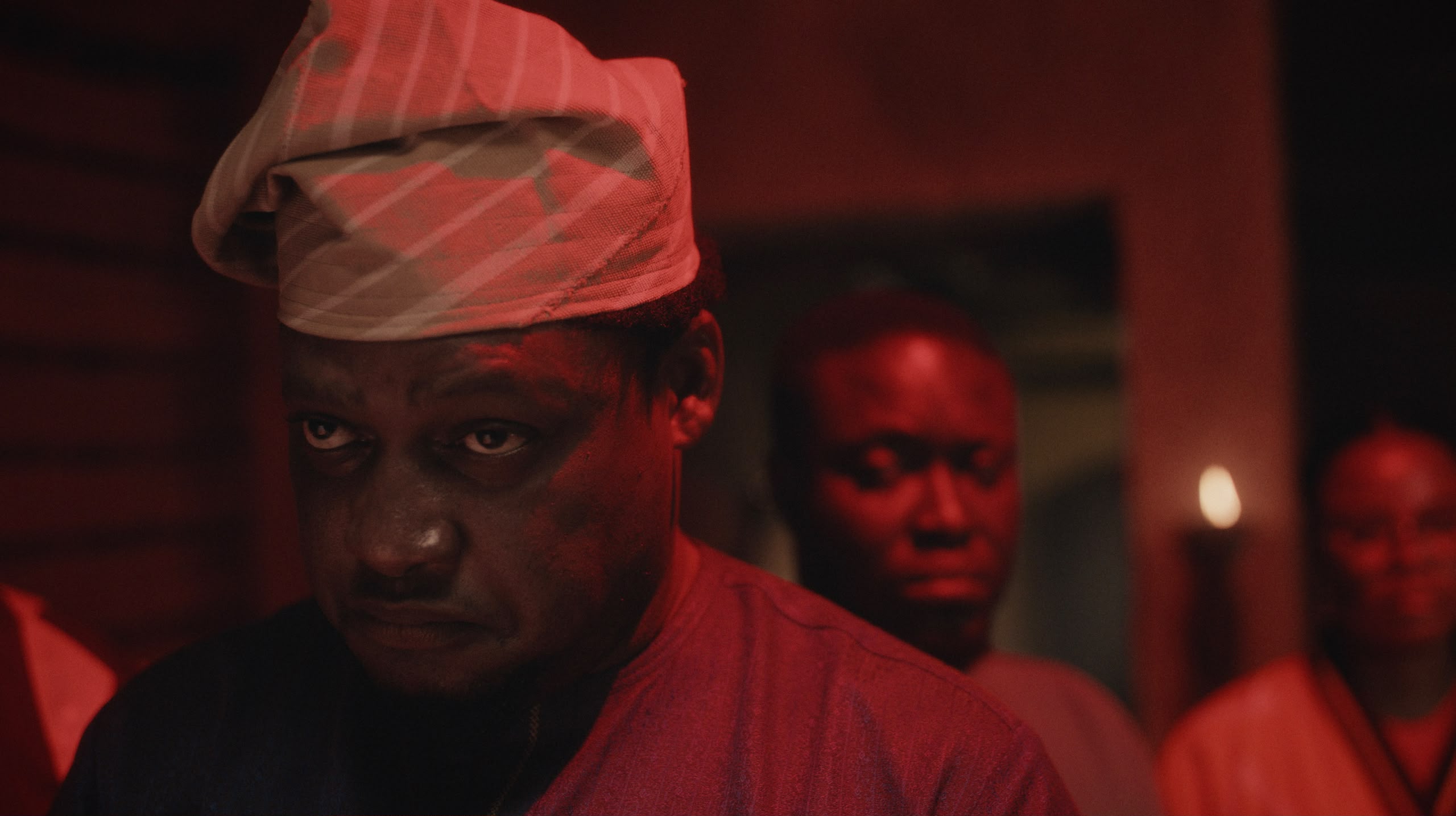
There were moments when the direction and cinematography created genuine tension without needing to over-explain what was happening. One scene that immediately comes to mind is the sequence involving the couple eating a dark egg when one of the tree spirits suddenly enters the scene. The way she slid into the shot was unsettling! Or what about the jump scares when Paulina appeared to Bose on the bed, or when the primordial beast appeared to Ishawaru in the dark forest? The flickering lights when fiends appeared? Bose climbing up the wall (P.S: Aanu Kolade-Abiodun was amazing in this movie)? If you saw these in the cinema, you probably remember these shots as well.
Honorable mention must go to the sequences with Ishawaru appearing in the missionaries’ house. With the drum beating by itself in the foreground, his menacing glare filled the screen with foreboding and dread.
This is the beauty of visual storytelling when done well. Using tropes we often see in horror movies, the makers used cinematic tools to communicate spiritual realities rather than relying entirely on dialogue to explain them. It brought the awareness of very real evil off of the familiar veneer of a nostalgic story into a very real modern canvas for us to engage with.
They didn’t come here to play.
The Economy of Cinematic Storytelling

Speaking of the use of cinematic tools, the brevity of the shots and the economy of the scenes was a major highlight for me.
From the behind-the-scenes materials and interviews available on YouTube, I understand that the original cut was over three hours long before being reduced to a more suitable theatrical runtime. Naturally, this would have required difficult editorial decisions.
However, I thought the final film demonstrated a good understanding of what was necessary to move the story forward. The shots were generally as brief as they needed to be, as no scene felt longer than it needed to be. We did not have to watch characters preparing to do things we could simply see them doing without sacrificing the information necessary for the story to make sense.
There was a comment on Twitter that captured an important distinction between the original Agbara Nla and Agbara Nla: The Return: the original was written, directed and acted almost like a stage play, while the new production was conceived and executed as a cinematic performance. I thought that was a very apt observation.
You could see the difference in how the story was carried across. The new film seemed much more conscious of the possibilities of the cinematic medium: how shots could communicate information, how lighting could establish atmosphere, how editing could control pacing, and how visual composition could communicate things that dialogue did not need to spell out.
The Arrival of Jesus
One of the most interesting aspects of the film, which I intend to explore more fully in the next part of this series, was the way Jesus was introduced into the story.
Throughout the film erstwhile we had encountered these different spiritual powers displaying their abilities, boasting about what they could do, and celebrating the people they had placed in bondage. We had also seen the limitations and fears that accompanied these powers. At the height of it all, Ishawaru had gone to the uttermost at great risk to his own life to unleash the depths of evil on his opponents.
Then Jesus appears.
What struck me was how different His presence was from everything we had encountered before.
He did not arrive boasting about His power. He did not seem interested in competing with the other spiritual forces or demonstrating that He was stronger than them. Instead, He approached Ishawuru with a question born out of compassion,
“Why are you persecuting me?”
That, to me, was so powerful in its contrasting subtilty.
It presented a picture of divine power that was fundamentally different from the powers we had seen throughout the film. While the other principalities displayed their power through intimidation, domination and bondage, Jesus demonstrated His through compassion: healing the sick, restoring the broken, and meeting one who had stood in opposition to Him, not to destroy, but to give him an opportunity.
And that is where Ishawuru’s story began to change.
There is a much bigger theological picture here, particularly in how this encounter points towards the victory of Calvary. But that deserves its own discussion.
The New Man: A Satisfying Payoff
Finally, I loved the last chapter, aptly titled The New Man.
One of the things that makes a good story satisfying is not merely showing us that a character has changed but allowing us to see the consequences of that change.
We were shown the difference in Ishawuru’s life, the difference in the town, and the difference in the world around him. The film returned us to the world it had introduced at the beginning, but this time, we could see the results of the victory.
It was a wonderful payoff.
What capped it for me was the final shot. Kola, acted by screenwriter Damilola Mike-Bamiloye, repents and goes to Muwonleru as a missionary. As his friends embrace him, Paul Esupofo (formerly Ishawuru) stares on at the scene with joy. In my heart, that shot transcended the scene. There, I saw Mike Bamiloye, the man that bore the original story with the scars from its production, and the journey with God that has carried the vision thus far, now staring at his son, 30+ years later, carrying the same vision with the same passion, and watching him with vicarious pride. I couldn’t imagine a better ending shot for a transgenerational story such as this.
I have quite a bit more to say about that, but that is for the third part of the series.
A Beautiful Retelling
For now, this has been my appreciation of the storytelling in Agbara Nla: The Return. In Part Two, I will explore some of the theological ideas that stood out to me, particularly the film’s portrayal of spiritual power in the light of a Christus Victor perspective on redemption, the person of Jesus, and the meaning of Ishawuru’s transformation.
Until then, thanks for reading!
EMMANUEL ONIMISI is a creative communicator who uses storytelling and different forms of media to educate, inspire and communicate ideas in ways that people can easily understand. His stories and books are available at EmmanuelOnimisi.com


One thought on “Agbara Nla: The Return – The Beauty of Storytelling”