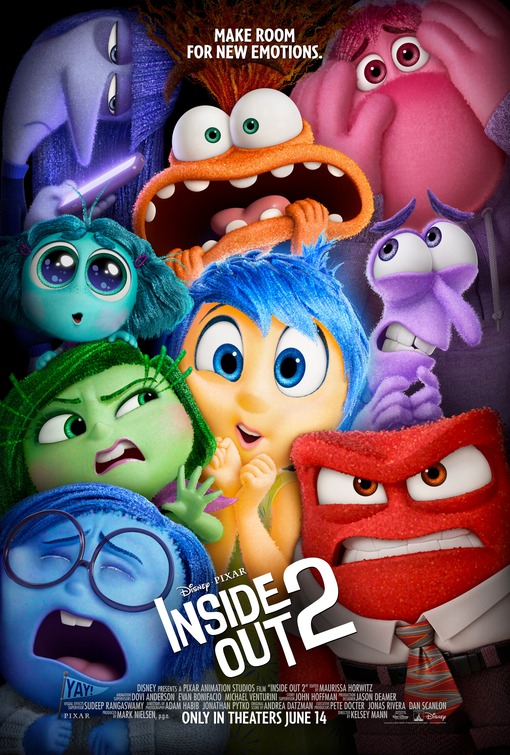
I recently got to watch Inside Out 2, the sequel to Pixar’s 2015 major ‘emotion’ picture (a tag line that the marketing team should get a raise for) which took the world by storm. I must say, this story moved me in ways beyond words. In this article I would be spoiling some details
Pixar: House of Feelings
Pixar has always excelled at making compelling stories out of the most unexpected characters, giving them arcs that are relatable to us in diverse ways. With each story and character arc, Pixar has succeeded in connecting with the hearts of viewers of all ages. With Inside Out, they took it up a notch. After giving toys feelings (Toy Story), giving vehicles feelings (Cars), giving rats feelings (Ratatouille), giving fishes feelings (Finding Nemo) and even giving monsters feelings (Monsters Inc.), Pixar actually gave feelings feelings! Inside Out is the story of a young girl names Riley Anderson, and of how her feelings played a role in the transitions of her growth through a life changing experience. With characters such as Joy, Sadness, Fear, Disgust and Anger residing within her mind, Inside Out took us through the rollercoaster of emotions she went through and taught a valid lesson for all: sadness is an important indicator that we need support, and it should not be shut down.
With Inside Out 2, Riley is becoming a teenager, and her feelings are about to get even weirder. Growing up to be a kind and exceptional young lady, her sense of self has been based on her core goodness, which is echoed in her words, “I am a good person.” But with puberty, new emotions develop that challenge her sense of self. Anxiety, Envy, Embarrassment and Ennui (with little cameos by Nostalgia) take up Riley’s headspace, as she tries to become like others she admires. The original five emotions (Joy and the gang) are literally bottled up and are set on an adventure to recover the Riley they know and love.
What got to Me
At the climax of the movie, Anxiety has made a mess of Riley’s life. At this stage Riley has lost her sense of self and her primary motivation is to get other people to like her. I could identify with this so much because, even beyond my teenage years, the desire to be affirmed and accepted has been a primary motivator for me and many of us for a long time. With Anxiety at her wits end, Riley realizes that, truly, she is not good enough. This pushes her into a panic attack.
When we realize that our attempts to align with the world’s perspectives and opinions will never truly succeed, if our goal has been to meet their standards, we would feel less than you ought to be. Many young people have found themselves here.
But this is where the emotions surprised me. Anxiety finally admits to Joy, “We don’t get to decide who Riley is.” And Joy realizes it too. All this time she had been trying to return Riley to her usual self by discarding any bad or painful memories, but now she allows Riley to learn from her mistakes those memories. Riley then gains something that is a valuable factor for everyone’s growth: self-awareness. Yes, she hasn’t been a good friend. Yes, she has messed up. Yes, she is not good enough. Yes, she wants to be at her best, but never measures up. But in that moment, Joy hugs her (it’s hard to describe this if you have not seen the movie), and the other emotions join in.
Awareness of our strengths and weaknesses primes us to be in the best position to receive the help we need and, best of all, to show grace to ourselves.
The makers of this movie did a really good job of illustrating the value of self-awareness in our growth, whether we be adolescents or adults.
My first key takeaway was that our emotions are only ‘indicators’ of how we feel. They should not be ‘directors’ of our actions, or determinants of our identities. Our feelings are not permanent. Know what is true and stick to it, no matter how your feelings go.
Also, awareness of our strengths and weaknesses primes us to be in the best position to receive the help we need and, best of all, to show grace to ourselves. The earlier we learn this, the better we would be. This is underlined at the end when Riley is asked if she made it into a team (something she had always desired), but while she wants to be on the team she is more open to the possibility of trying again if she fails. This time, she sees herself as more than her achievements or failures, and she can master them for her growth.
One of the biggest contradictions many believers face is reconciling our acclaimed righteousness with the failures and weaknesses we find in ourselves occasionally. Sometimes it feels hard to acknowledge them, and sometimes we may even feel they disqualify us before God and the people in our lives. But our weaknesses are reminders that we need the Savior, and He is always ready to help us.
Our worth is not in other’s perception of ourselves, but in our Creator’s. He sees us at our best and at our worst, and He loves us still.
And so also should we.
You are not your failures or your successes. You are you. It is the true you that can grow.
Thank you for reading. Have you ever experienced an event that made you more self aware? Please share with us. It might encourage someone.
 Emmanuel Onimisi